
A great Fiji cultural day tour should feel personal from the moment you arrive – not staged, not rushed, and not treated like a quick stop between beaches. For many visitors, it becomes the day they remember most because it adds real connection to the holiday. You are not only seeing Fiji, you are spending time with the stories, customs, food and community life that shape it.
If you are staying around Nadi, Denarau, the Coral Coast or heading out from a resort area, a cultural tour can be one of the easiest ways to experience more than the postcard version of the islands. The best ones are carefully run, respectful of local communities, and simple to book, with transport and timings clearly explained before the day begins.
Click here to get in touch with us!
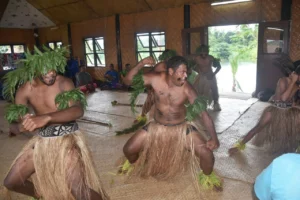
Why a Fiji cultural day tour is worth adding
Beach time in Fiji is easy to love, but culture gives your trip depth. A well-run cultural day tour brings context to everything else – the welcome you receive, the food on your plate, the villages you pass, and the traditions that still sit at the heart of daily life.
For first-time visitors especially, this kind of tour answers questions you may not even know you have yet. Why is the kava ceremony so important? What do different meke performances represent? How should you dress for a village visit? A good local guide makes these details feel natural and engaging rather than formal or overly rehearsed.
It is also one of the best options for travellers who want a meaningful experience without needing to organise complicated logistics. Instead of hiring a car, working out directions and trying to understand local etiquette on your own, you can enjoy the day knowing the practical side has already been handled properly.
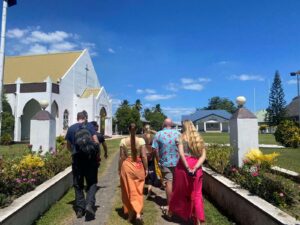
What you can expect on a Fiji cultural day tour
No two tours are exactly the same, and that is part of the appeal. Some focus on village life and protocol, while others combine cultural experiences with sightseeing, markets, waterfalls or a traditional lunch. Even so, there are a few features that regularly make up the strongest experiences.
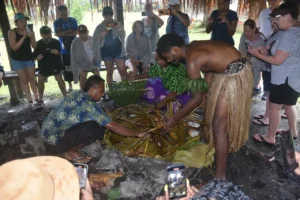
Village visits and local etiquette
For many travellers, visiting a Fijian village is the highlight. This is where the experience either feels authentic or misses the mark, so the quality of the operator matters. Respectful tours prepare guests properly in advance, explain what to wear, when to remove hats, when to avoid taking photos, and how to behave during a formal welcome.
That preparation makes a real difference. Instead of feeling unsure or intrusive, you can relax and appreciate the warmth of the welcome. It also shows respect to the hosts, which is essential on any cultural experience.
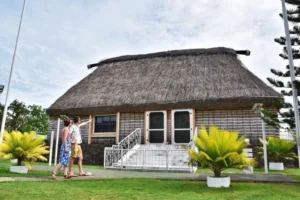
Kava ceremonies and storytelling
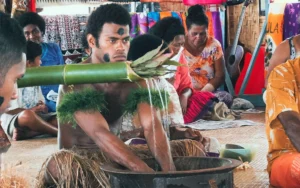
A traditional kava ceremony is often included and is much more than a simple tasting. It is tied to hospitality, community and protocol. Your guide should explain how it works, what the ceremony represents, and what to do when it is your turn to receive the bowl.
For some visitors, this becomes one of the most memorable parts of the day because it slows the pace down. You are not just watching a performance. You are taking part in a custom that still matters deeply in Fiji.
Meke performances, crafts and food
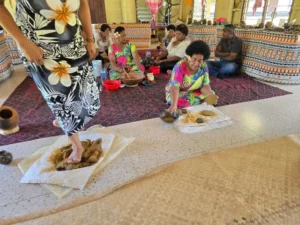
Depending on the tour, you may also see meke dance and music, cooking demonstrations, weaving, pottery or carving. These elements can be lively and entertaining, but the better tours do more than put on a show. They explain the meaning behind what you are seeing and how these practices connect to family, ceremony and local identity.
Food is another major part of the experience. A traditional lunch, lovo-style feast or home-style village meal can be a standout, especially if it is presented with context rather than just served as a buffet. If you have dietary requirements, it is always worth checking before booking rather than assuming every tour can cater for them.
How to choose the right Fiji cultural day tour
This is where travellers often make the difference between a good day and an outstanding one. A cheap tour is not always the best value, and the most polished advertising does not always guarantee a better cultural experience. What matters most is how the tour is run on the ground.
Look for operators with clear inclusions, reliable transport, and detailed pre-tour information. If the itinerary sounds vague or you cannot tell whether entry fees, meals or hotel pick-up are included, ask first. Transparent pricing is a strong sign you are dealing with a professional local business rather than a reseller with limited on-island support.
Reviews also matter, but read them with some judgement. Comments about knowledgeable guides, smooth transfers, respectful village access and good communication usually tell you more than general praise alone. If previous guests mention feeling welcomed, informed and well looked after, that is a strong indicator of quality.
It also helps to match the tour to your travel style. Some visitors want a half-day experience with minimal travel time. Others are happy to spend a full day on the road if it means visiting a more traditional community setting. Neither option is wrong – it depends on how much time you have and how central culture is to your Fiji itinerary.
Timing, transport and comfort
A cultural tour should be enjoyable, not tiring for the wrong reasons. That is why pick-up arrangements, travel distances and pacing are worth checking before you commit.
From Denarau and Nadi, many tours are easy to access as a day trip. If you are based on the Coral Coast, Pacific Harbour or at an island resort, the journey may be longer or require more coordination. The benefit of booking through local experts is that these logistics are usually sorted clearly, which saves you spending holiday time trying to piece it together yourself.
Weather can also shape the day. Fiji is warm year-round, but some tours involve walking on uneven ground, village paths or outdoor performances. Comfortable clothing, respectful dress, sun protection and a bottle of water are all sensible. If rain is forecast, ask whether the experience still runs and whether any parts of the itinerary change.
For families and older travellers, comfort is particularly important. Not every cultural tour is physically demanding, but some are more suitable than others. A dependable operator should be upfront about driving times, steps, terrain and facilities so you can book with confidence.
The value of booking with local specialists
One of the biggest advantages of choosing a trusted local operator is that the experience tends to feel smoother from start to finish. That includes practical things like confirmed pick-up times, straightforward communication and no hidden booking surprises, but it also extends to the quality of the cultural access itself.
Local specialists usually have stronger on-the-ground relationships and a better sense of what will suit different travellers. They know which tours are ideal for couples, which work well for cruise passengers or short stays, and which are best for visitors who want something less commercial and more community-based. That sort of guidance is hard to replace with generic online booking platforms.
This is where Fiji Experiences adds real value for holidaymakers who want both convenience and authenticity. Instead of booking blind, you can choose from well-curated experiences backed by local knowledge, transparent pricing and practical support before the tour even starts.
Common questions travellers ask
One of the most common concerns is whether cultural tours are genuinely respectful to the communities involved. The answer is that it depends on the operator. Well-managed tours work within village protocols, prepare guests properly and avoid turning meaningful customs into rushed entertainment.
Another question is whether children will enjoy the day. In many cases, yes. Music, dance, food and village interaction can be excellent for families, especially when the schedule is not too long. Younger children may struggle with lengthy transfers, so it is worth checking the timing.
Travellers also ask whether a cultural tour is still worthwhile if they have already booked island time, snorkelling or sightseeing. Usually, yes. It offers something those experiences do not – an understanding of Fiji that stays with you long after the holiday photos are sorted.
The best Fiji holidays balance scenery with substance. A Fiji cultural day tour does exactly that, giving you a warm welcome, a stronger sense of place and a day that feels genuinely connected to the islands you came to experience. If you choose well, it will not feel like an add-on to your trip. It will feel like one of the reasons the trip mattered.